*No morning practice on Tuesdays or Sundays. No Saturday evening practice on retreat weekends (see full practice calendar for details).
5:45 AM 108 bows
6:10 AM Morning chanting
6:35 AM Sitting meditation
Daily Temple Schedule
Morning and evening practice are offered every day, following a traditional monastic temple schedule. We have three primary forms of practice—bowing, chanting, and sitting meditation—which are common among all Kwan Um temples in the world.
All are welcome to join daily practice, no registration required. Please arrive 10 minutes early to get settled in the Dharma Room before the posted start time.
Daily Regular Schedule
Daily Morning Practice
5:45 AM 108 Bows
6:10 AM Morning Chanting
6:30 AM Sitting meditation
Daily Evening Practice
6:30 PM Special Chanting
7:00 PM Regular Chanting
7:30 PM Sitting Meditation
*No morning practice on Tuesdays and Sundays. No Saturday evening practice on retreat weekends (See practice calendar for details.)
Weekly Special Programs*
TUESDAY EVENING PROGRAM
5:30 PM Join us for community dinner
7:30 PM Long sitting with interviews
Thursday EVENING PROGRAM
6:45 PM Intro to Meditation Class
7:30 PM Dharma Talk (replaces sitting)
8:30 PM Refreshments
Sunday morning program
9 - 11 AM Long sitting with interviews
11 AM Refreshments
12:30 PM Young Zen
6:30 PM Special Chanting
7:00 PM Regular Chanting
7:30 PM Sitting meditation
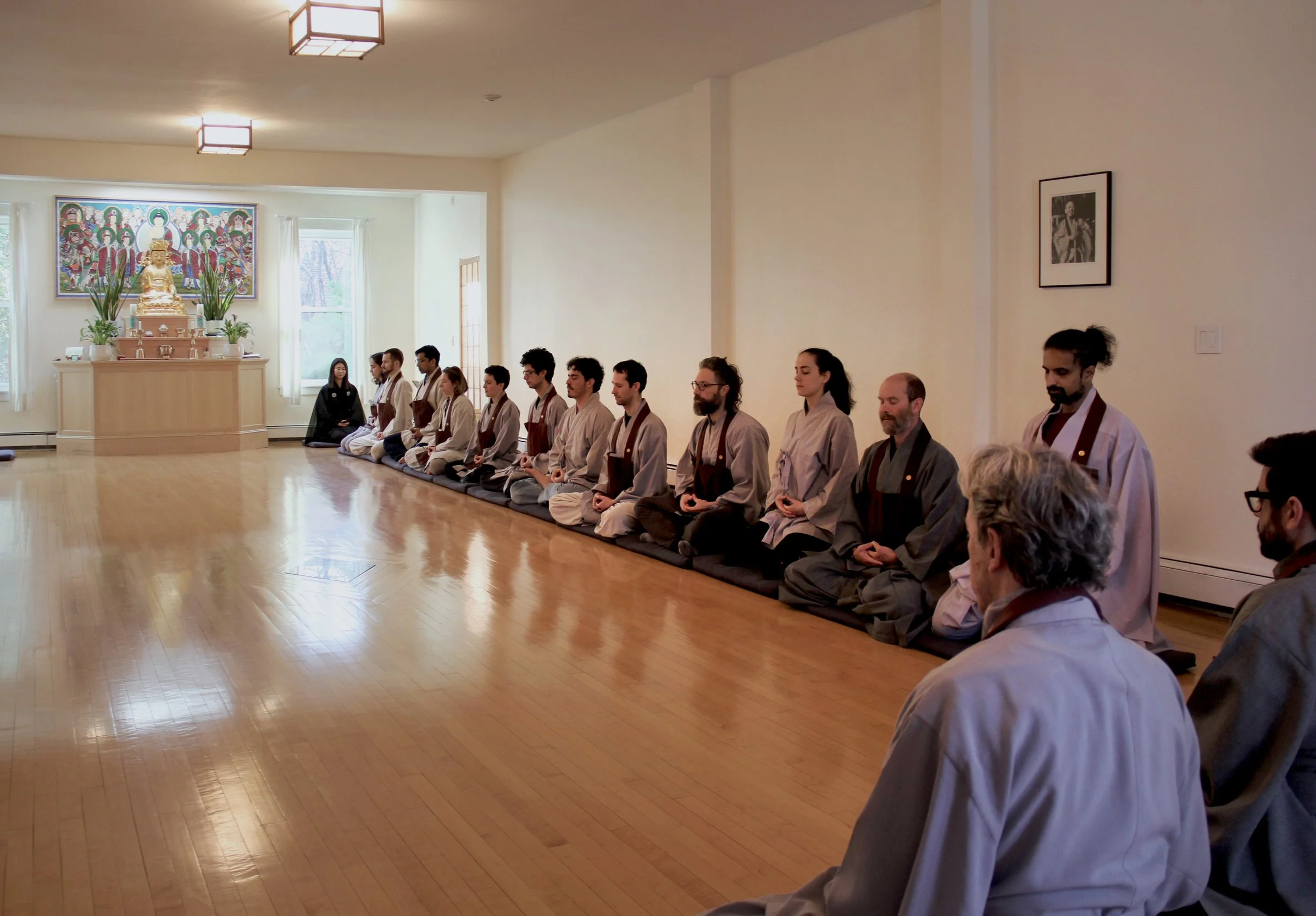
In the Dharma Room, we practice in harmony with other people. Each person’s practice supports every other person’s practice.
-
When entering and exiting the Dharma Room, we bow toward the alter. If you are late to sitting, please do not enter.
It is OK to make mistakes while you are learning the forms!
-
The most important thing in the Dharma room is to be present—watch and follow what others around you are doing.
Walk behind the cushions to take your seat and not through people’s line of sight.
Maintain silence during sitting meditation, and in between practice periods. While sitting, do your best to maintain stillness. If your legs fall asleep, or you need to adjust position, simply stand behind your cushion with hands in hapchang (prayer position at heart center), and stay until you are ready to sit again.
-
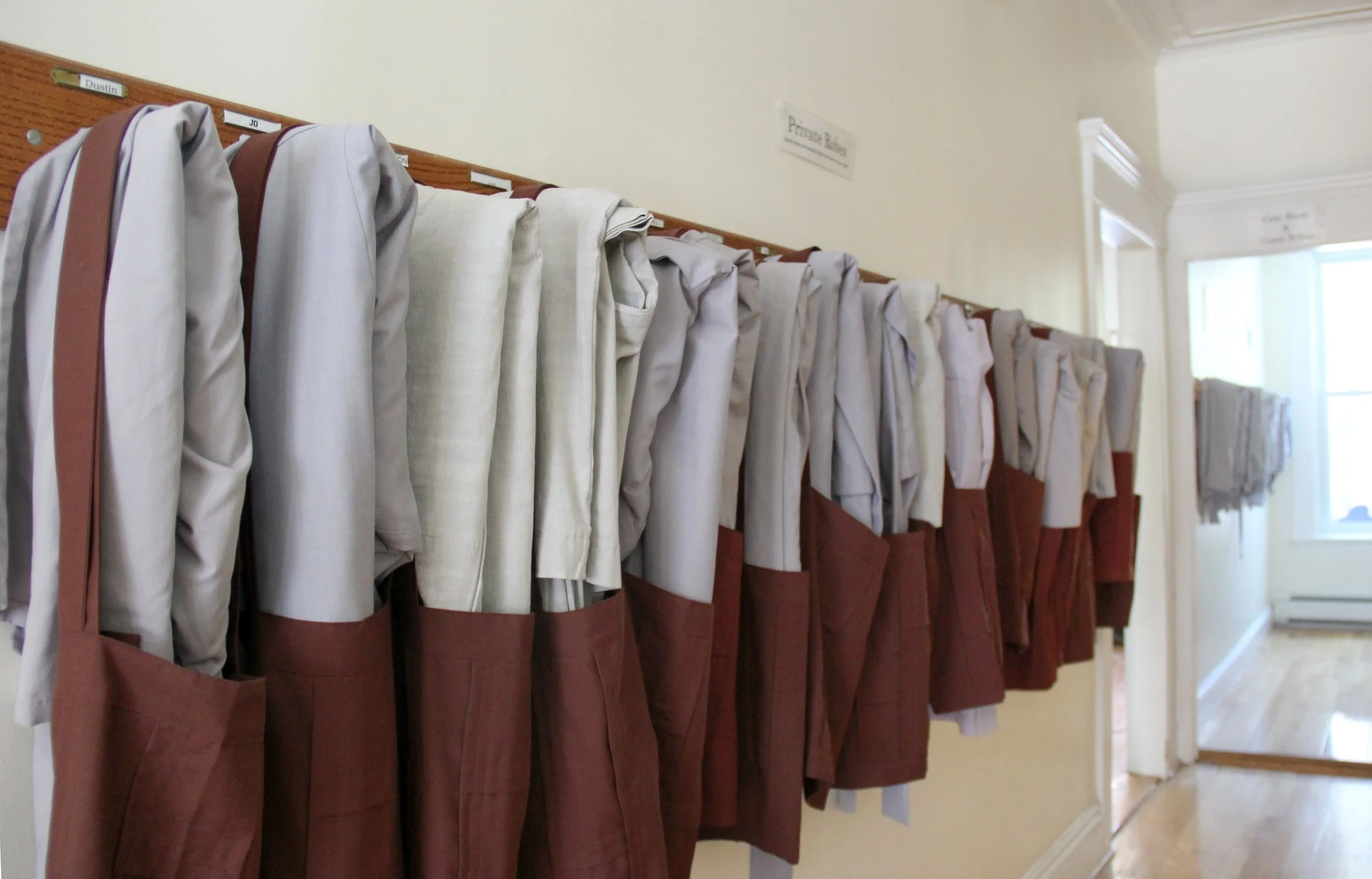
Long, comfortable bottoms are encouraged. Gray meditation robes are provided by the Zen Center.
Please refrain from wearing beanies, baseball caps, or other hats/headwear. Headwear that has religious, cultural, or other similar significance is absolutely welcome. Monastics from other traditions are welcome to wear their own attire."
learn about
Practice Forms
Sitting Meditation
“Clear mind is like the full moon in the sky. Sometimes clouds come and cover it, but the moon is always behind them. Clouds go away, then the moon shines brightly. So don’t worry about clear mind: it is always there. When thinking comes, behind it is clear mind. When thinking goes, there is only clear mind. Thinking comes and goes, comes and goes. You must not be attached to the coming or the going.”
Chanting Practice
The Kwan Um school is named after Kwan Seum Bosal (Ch.: Kwan Yin 觀音, lit. “Perceive Sound”) the bodhisattva of compassion, who perceives the world’s suffering. This refers to the compassionate awareness that hears and responds to the suffering of all beings.
Chanting together in the Dharma Room cultivates our together-action. We chant at a volume where we may hear ourselves but also everyone around us.
Do not worry if you do not know the chants. Simply let the sound become the focus of your awareness.
-
Kwan Um Chanting Booklet (including translations)
-
Morning Chanting
Morning Bell Chant (p. 2)
Heart Sutra in English (p. 8)Special Chanting
Thousand Eyes and Hands Sutra (p. 16)
Kwan Seum Bosal Chanting (p. 25)Regular Chanting
Evening Bell Chant (chanted solo by the bell ringer)
Homage to the Three Jewels (p. 6)
Heart Sutra in Korean (p. 8)
Heart Sutra in English (p. 10)
Great Dharani (p. 12) -
Kong-an Practice
During long sits, Dharma students have an opportunity to meet one-on-one with a teacher to ask any questions about life and Zen practice.
During these meetings, students may choose to participate in kong-an practice. Kong-an practice, from the Korean 공안 (derived from the Chinese gong’àn, meaning “public case”), is a Zen method of contemplation using paradoxical questions or dialogues from the Zen tradition to cut through conceptual thinking and awaken direct insight into reality.
Guiding teacher Zen Master Bon Yeon talks about Kong-an practice in this video.
Bowing Practice
There are two types of bowing in the Kwan Um School. One is bowing as part of the forms—when we enter and exit the Dharma room. One is bowing practice early every morning.
In this video, Zen Master Bon Yeon explains the bowing forms as an awareness and intention practice, and the 108 bows as an energizing, embodied meditation practice. Zen Master Dae Bong says “bowing practice means that your body and your mind become one very quickly. Each bow cleans one compartment in your mind. So our bowing practice is like a repentance ceremony every morning.”